Abrasive recovery: how the abrasive gets back into the circuit
Convey, clean, reuse: how sandblasting halls and sandblasting containers recover the abrasive and which system suits which business.
A sandblasting hall uses a lot of abrasive in a short time. To prevent it from being lost, it is collected after impact, cleaned and reused. Recovery is the heart of every blasting plant.
How the circuit works
- Collecting: the used abrasive falls through the grating into the conveyors in the floor.
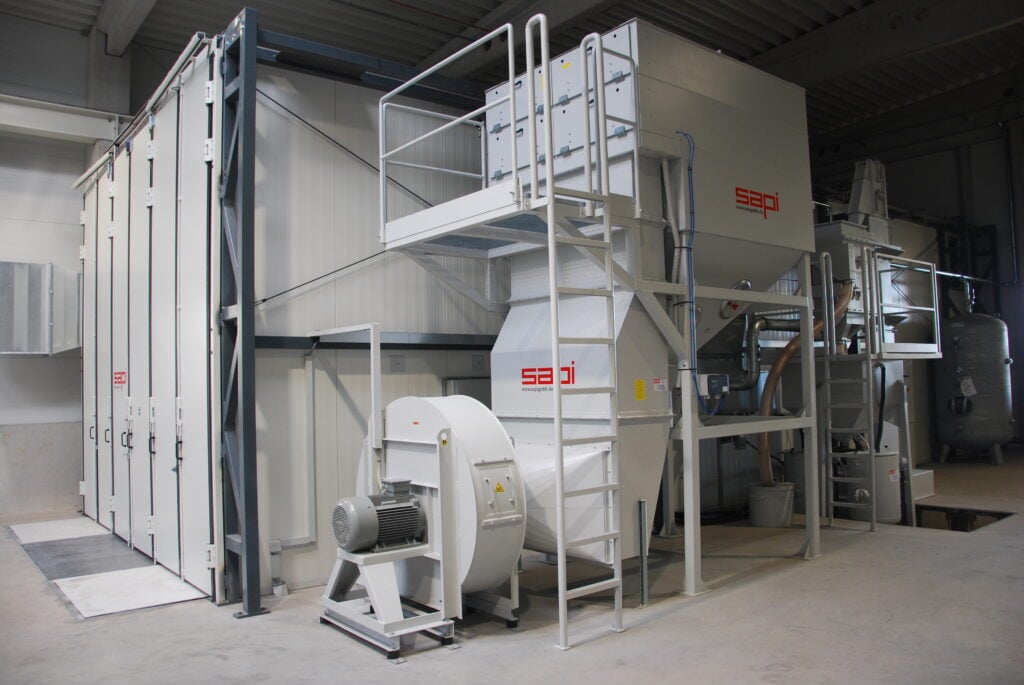
- Conveying: longitudinal and cross conveyors take it to a bucket elevator, which transports it vertically upwards.
- Cleaning: the abrasive cleaner separates reusable material from dust and fines, optionally with a magnetic separator for iron particles.
- Supplying: the clean abrasive goes into a storage silo of 200 to 4,000 litres and is ready for the next blasting cycle.
Four levels of equipment
- Fully automatic (standard): conveyors across the entire length and width of the hall, no sweeping necessary
- Semi-automatic: cross conveyor, the rest is swept in manually
- Bucket elevator recovery: sunken floor with a slope
- Manual: sweeping system for small plants or occasional use
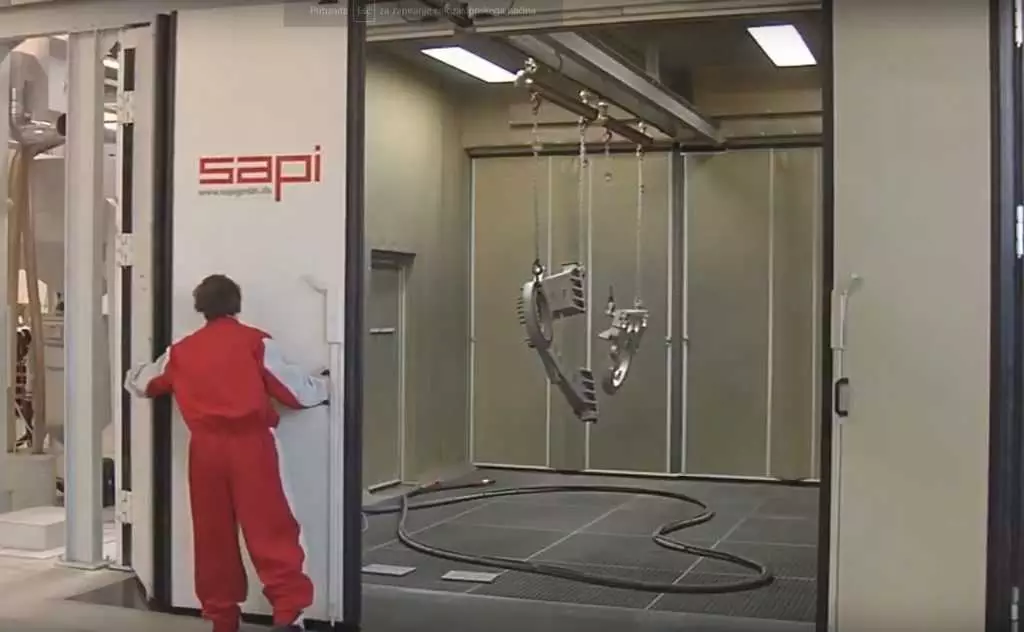
In the preconfigured CORE sandblasting hall, the patented SAPI flat conveyor system handles the fully automatic circuit. The video of the CORE hall for Ferolin shows what this looks like in practice.
Recovery in the sandblasting container
In the sandblasting container, too, abrasive handling is decisive for efficiency. Depending on the abrasive and the component, flat conveyors or suction-based systems are used, gravity-based or vacuum-assisted. The floor geometry also influences how much abrasive comes back. All SAPI BASIC containers have abrasive recovery.
Why it pays off
A well-designed circuit saves abrasive, keeps visibility in the hall clear and relieves the filter system. It is important that the filter, conveyors and blasting technology are matched to the same hall volume. That is why SAPI plans all subsystems from a single source.