
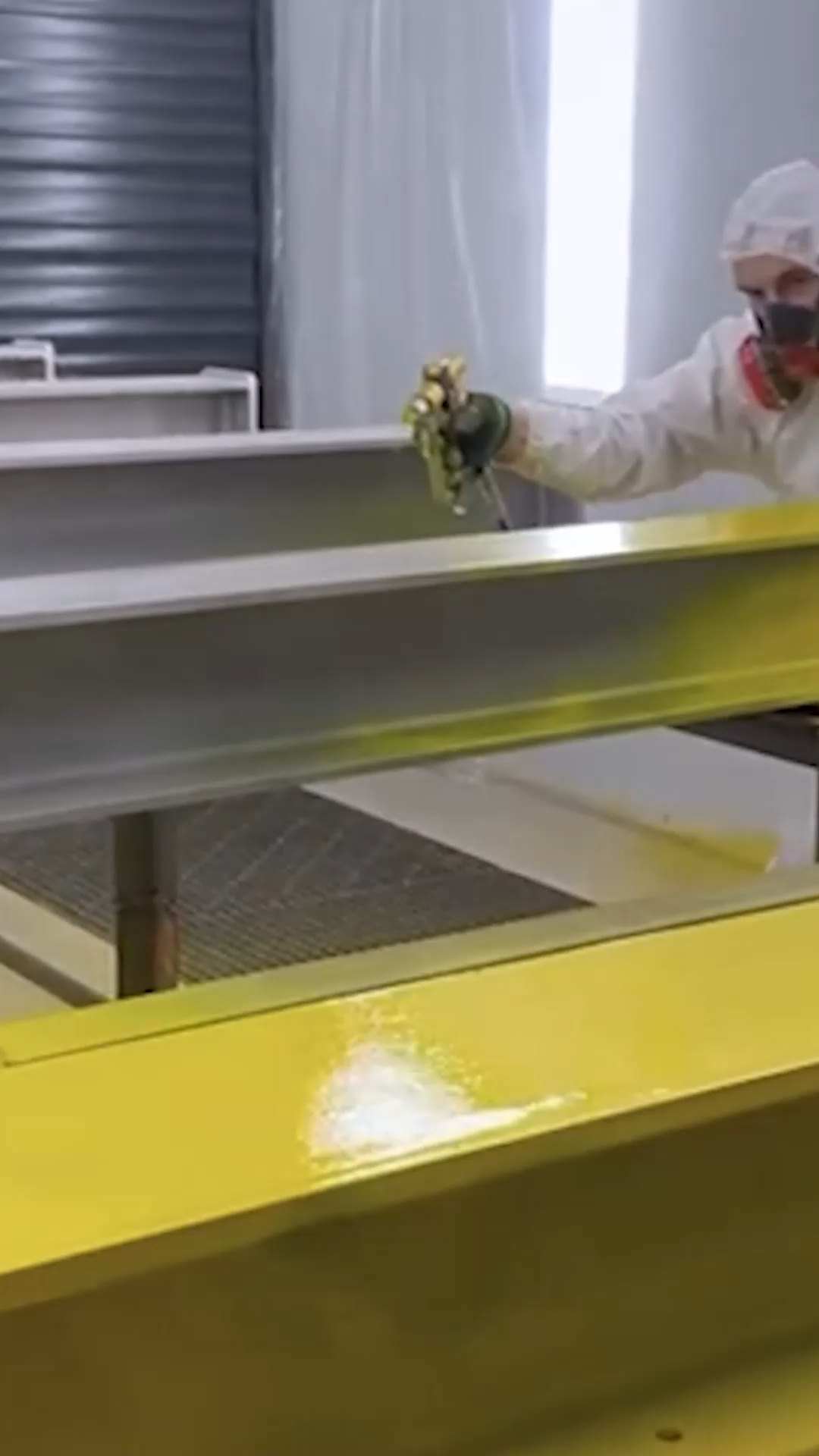
Paint booths · Paint halls · Drying booths
Paint booths and paint halls built to measure.
SAPI designs and builds industrial painting systems: from a single paint booth to a complete paint hall with drying, conveyor system and paint supply. Developed and manufactured in Germany.
- Since 1970Plant engineering from Möttingen
- 2 in 1Painting and drying in one booth
- up to 2,000 kgConveyor system with switches
- Oil, gas, electricHeating of your choice
How it works
How a paint booth works
Airflow is the key to a clean paint finish. Select the operating mode and extraction type, then click the numbers to view the individual assemblies.
- Outside air
- Supply air (colour = temperature)
- Exhaust air (filtered)
- Paint / overspray
Simplified illustration: Images and illustrations may differ from actual projects. The animation is a simplified, schematic representation of the working principle.
Line burner directly in the supply air stream: fast heat-up with high efficiency.
Fresh air is drawn in, filtered, heated if required and blown evenly into the booth through the filter ceiling. The airflow carries the overspray away from the painter towards the extraction. There, overspray separators capture the paint particles, and the fan discharges the cleaned air through the roof.
Floor extraction: the air flows vertically from the ceiling through floor gratings into the floor duct. Workpieces can be painted from all sides, and the overspray sinks evenly downwards.
-

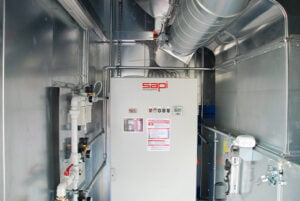
Draws in fresh air, filters it and heats it via a burner or heat exchanger. This keeps the booth at painting temperature, even in winter.
-

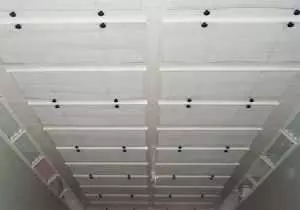
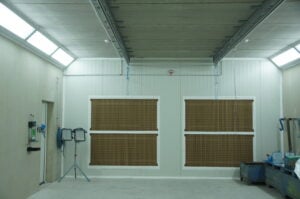
The supply air flows evenly and dust-free into the booth through large-area ceiling filters. The filter mats are easy to replace.
-

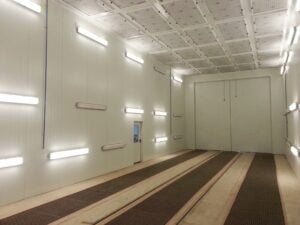
Light-coloured walls and LED lights ensure good visibility. Workpieces are moved into the booth on trolleys or on the conveyor system.
-

Depending on the design, via floor gratings or an extraction wall. Paint mist filters capture the overspray.
-
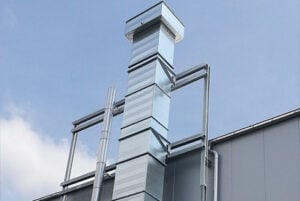
The fan discharges the filtered air through the roof. For higher solvent levels, we also recommend activated carbon filters.
-
During drying, the warm air is recirculated. Optionally, a cross-flow heat exchanger or a heat wheel recovers energy from the exhaust air.
Components
What makes up a SAPI paint hall
Every system is designed around your workpiece and your workflow. These assemblies are typically included.

Paint booth
The heart of the system, with modern air filtration and ventilation for a dust-free environment and the best paint results.

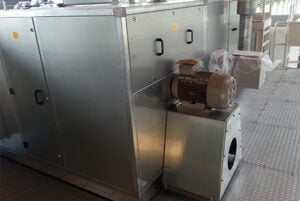
Air supply and air handling
Replaces the extracted air with filtered, tempered fresh air and keeps the booth's air balance stable.
Exhaust system
Removes overspray and volatile organic compounds (VOC) from the booth, protecting air quality and operators.
Drying and curing oven
After painting, parts cure in the oven or directly in the combined booth and gain a durable, hard-wearing finish.
Conveyor system
An automated conveyor system moves workpieces from the paint booth to the oven, efficiently and evenly.
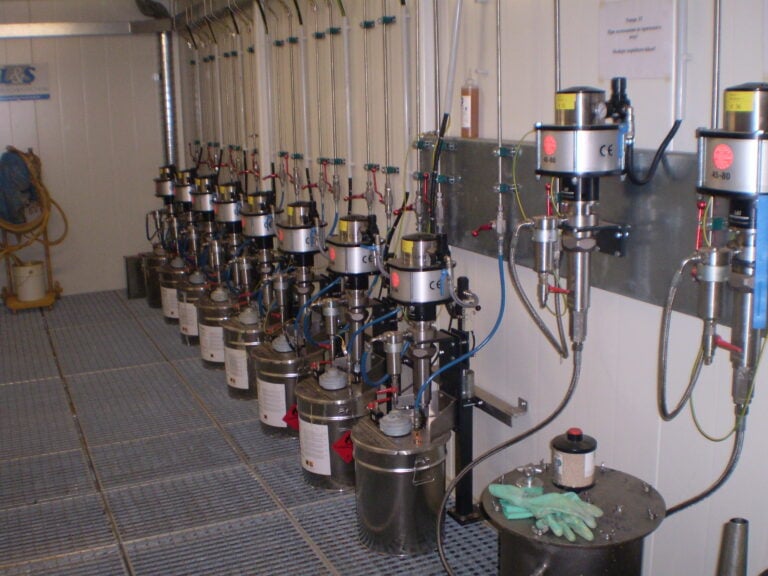
Paint supply
An integrated paint supply with airless pumps feeds paint to the entire paint booth.
Control system
The brain of the system: here the operator controls ventilation, temperature and conveyor speed.
LED lighting
Bright, energy-saving LED lights that withstand the harsh conditions and chemicals in the paint hall.




Tailored equipment
Matched to your operation
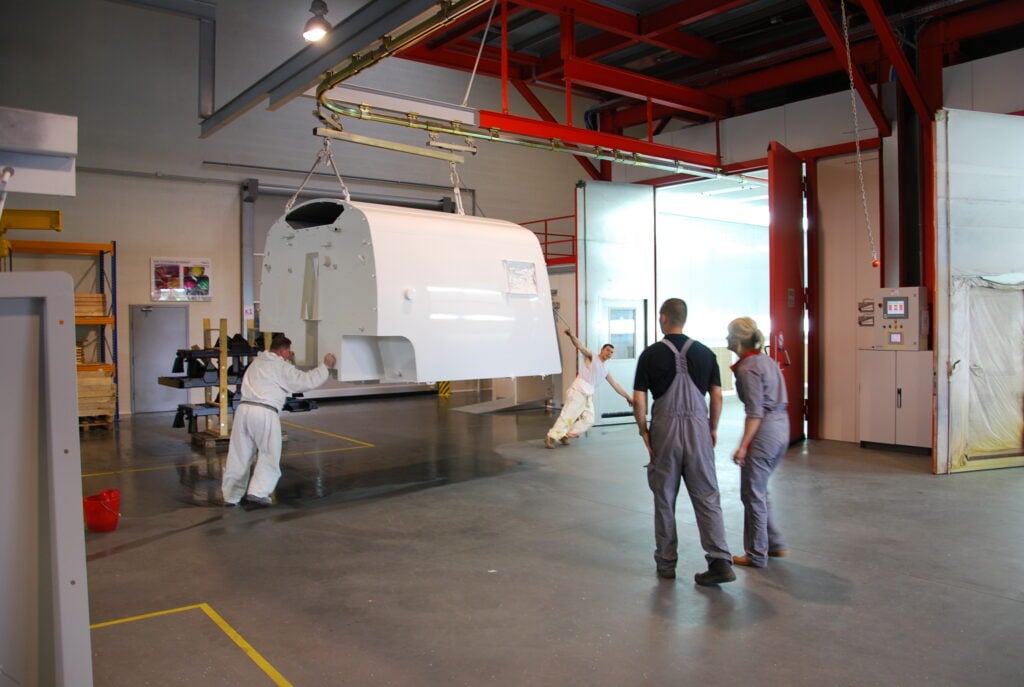
Conveyor system
Transport system for paint and blast halls
Conveyor systems with crossings and switches move components weighing up to 2,000 kg. Blasting, loading, painting and drying can thus be linked into one continuous line.
- Components up to 2,000 kg
- Crossings and switches
- Connection to blast hall and drying room
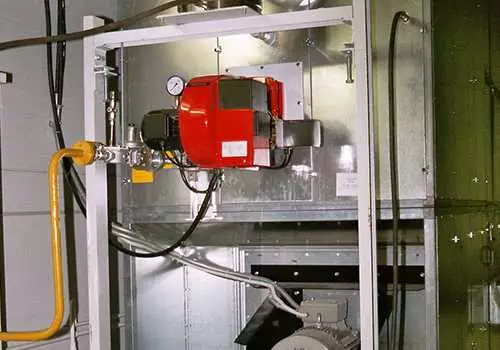
Heating and energy
Versatile heating and drying options
We select the heating unit to suit your energy supply. Heat recovery lowers operating costs, and for higher solvent levels we recommend activated carbon filters.
- Oil or gas, direct, with line burner
- Gas, indirect, with combustion chamber
- Pumped hot water or electric
- Heat recovery: cross-flow heat exchanger or heat wheel
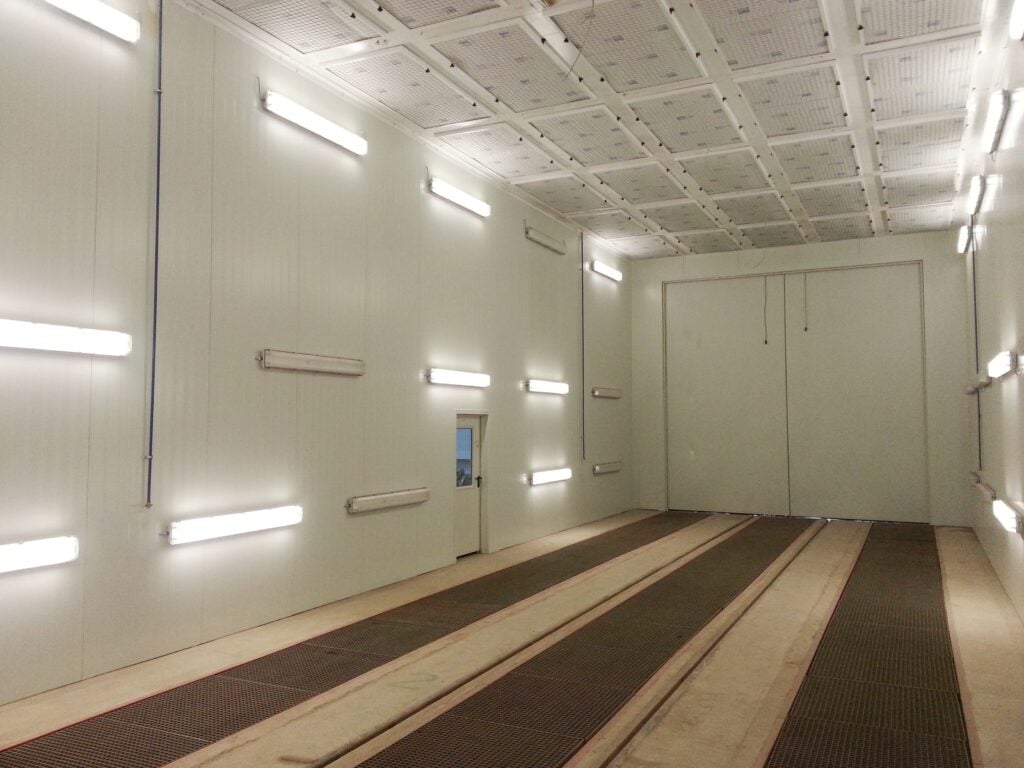
Combined booth
Painting and drying in one booth
In the combined paint and drying booth, the system switches to drying after painting. This saves space and transport routes. We take new coating systems such as waterborne paints, polyurethane resin, zinc-rich epoxy or micaceous iron oxide epoxy coatings into account in the design.
- Switchover painting / drying
- Easily replaceable filter elements
- Designed for modern coating systems
Gallery
Painting systems by SAPI
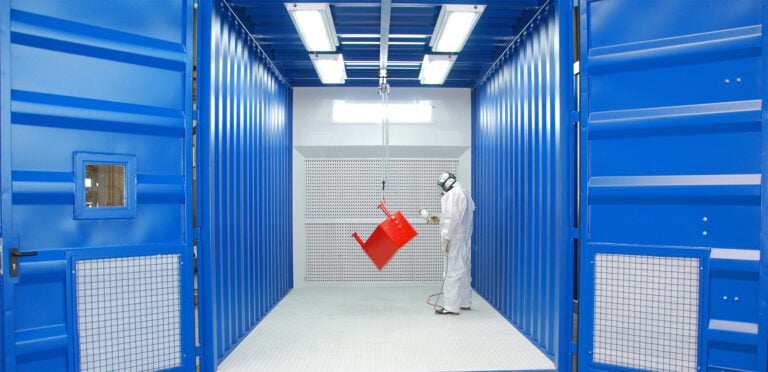
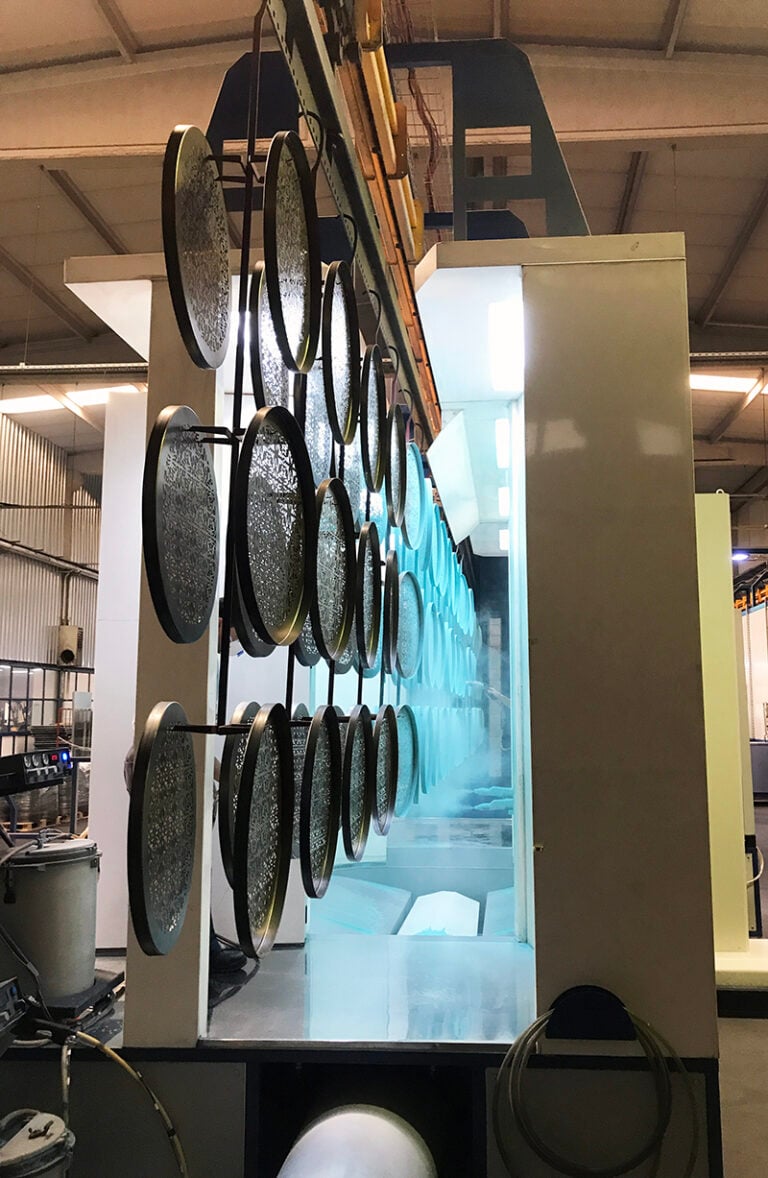
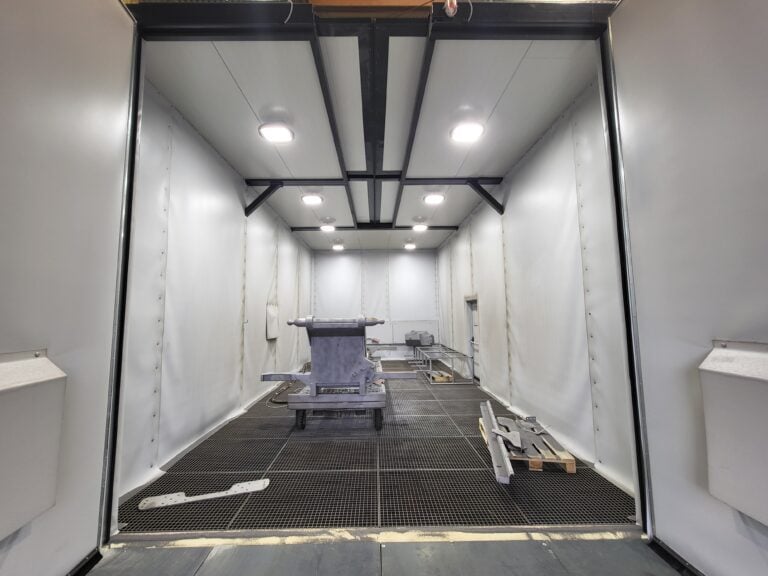
Completed paint halls, combined booths and system components. Click to enlarge.
Videos
Painting systems in action
Why SAPI
Why choose our paint and drying booths
- 01
Quality
Well-engineered integration of filtration, air supply, controls and conveyors for smooth operation and outstanding results.
- 02
Safety
Efficient extraction, fire protection equipment and fire- and chemical-resistant materials for a safe working environment.
- 03
Built to measure
No one-size-fits-all: design and function are matched to your workpieces and processes.
- 04
Easy to maintain
Durable, easy-to-clean materials and quick-change filter elements.
- 05
Service
We support you through planning, installation and commissioning, and assist with maintenance and troubleshooting.
- 06
Environment
Effective exhaust air filtration, LED lighting and heat recovery reduce emissions and energy costs.
Frequently asked questions
Questions about paint booths
How big is a SAPI paint booth?
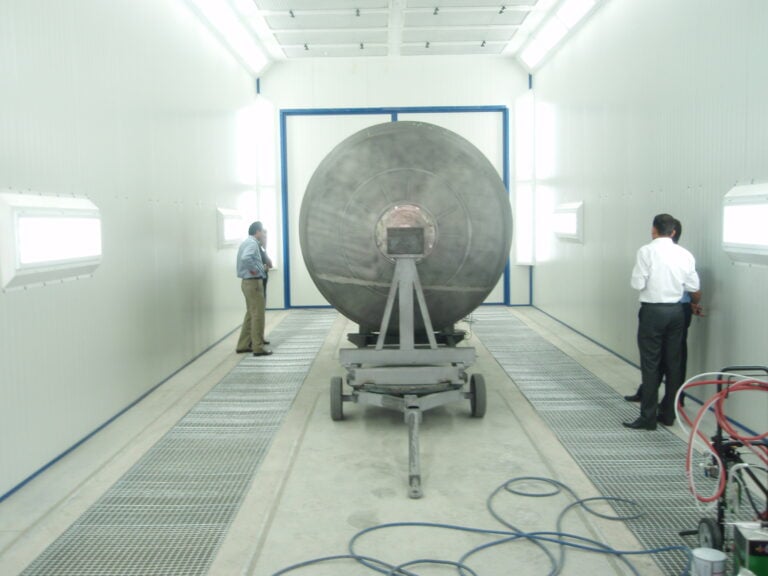
At SAPI there is no standard size. We build paint booths and paint halls to suit your workpieces, from small components to rail vehicles and large steel structures.
What is the difference between a paint booth and a paint hall?
A paint booth is an enclosed room with its own air supply and exhaust. A paint hall usually comprises one or more large booths together with drying, conveyor system, paint supply and controls, in other words the complete painting system.
Floor extraction or rear-wall extraction: which is better?
With floor extraction, the air flows vertically downwards into a floor duct. This is ideal for large workpieces that are painted all round. Rear-wall extraction (cross-flow) needs no floor duct and is easier to install. We will advise you on which design suits your application.
Can parts also be dried in the booth?
Yes. In a combined paint and drying booth, the system switches to recirculation mode after painting and heats the air. Alternatively, we can design a separate drying and curing oven.
How energy-efficient is the paint hall?
Our booths are equipped with LED lighting and energy-saving air handling. Recirculation during drying and heat recovery via a cross-flow heat exchanger or heat wheel reduce energy costs even further.
Which heating types are available?
Oil, direct gas with line burner, indirect gas with combustion chamber, pumped hot water or electric.
What safety features does the booth have?
Effective exhaust systems, fire protection equipment and fire- and chemical-resistant materials. We design the system in line with the applicable safety standards.
Which materials can be painted?
Metals, plastics and wood. The system is designed for your coating systems, for example waterborne paints, polyurethane resin, zinc-rich epoxy or micaceous iron oxide epoxy coatings.
How does installation work?
We guide you step by step from planning through installation and commissioning, keeping disruption to your ongoing operations to a minimum.
How much does a paint booth cost?
The price depends on size, extraction, heating, drying and conveyor system. Send us your workpiece dimensions and quantities and we will prepare a customised quote.

Your contact
Plan your painting system with us
Send us workpiece dimensions, weights, quantities and your coating system. We will get back to you with a proposal.
SAPI GmbH